
How to paint woodwork, doors and panels
Doors, frames and skirting boards are touched every single day. Here you'll find the method that gives a smooth, hard-wearing finish with no brush marks.
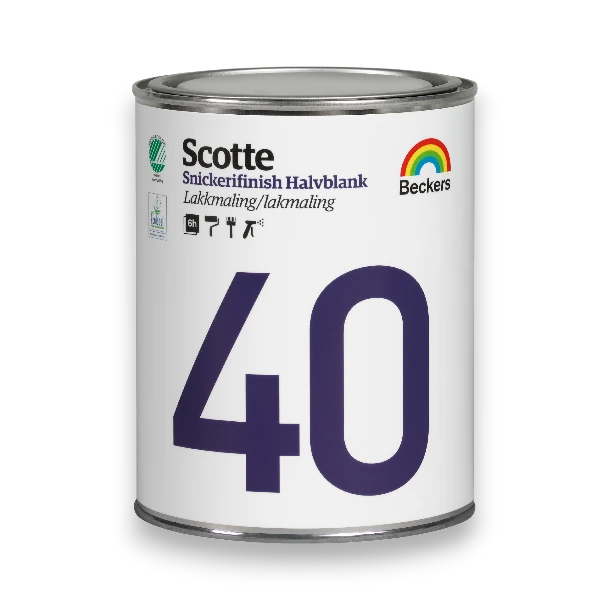
Woodwork is where the difference between a “DIY job” and a professional finish shows most clearly. The secret isn’t an expensive brush, but sanding, the right paint and patience between coats. With a water-based woodwork paint in gloss level 30–40, you can easily achieve a result that stands up to comparison.
Choose your paint and gloss level
- Gloss 30–40 (mid-sheen): the classic choice for doors, frames and panels. Hides minor imperfections and is easy to keep clean.
- Gloss 50–80 (satin/gloss): more durable and easier to wipe down, but shows sanding flaws and uneven surfaces more readily.
- Water-based or oil-based? Water-based woodwork paints don’t yellow, have very little odour and can be recoated the same day. We recommend water-based for all indoor use.
How to do it
1. Remove fittings and mask up
Remove handles, hinges and hardware, or mask them thoroughly with tape. Take the door off its hinges and lay it flat on trestles – this prevents runs and lets you work with even pressure. Cover the floor.
2. Clean and sand
Wash all woodwork with a sugar soap or degreaser – grease from hands is the most common reason paint peels on doors. Then lightly sand the entire surface with 180–240 grit to give it a key. Old, glossy varnish will need more thorough sanding. Wipe down with a damp cloth to remove dust.
3. Fill and prime
Fill holes and deep scratches with a fine filler, then sand flush. Bare wood, filled areas and old, chalky paint should be primed with a woodwork primer – otherwise the difference will show through the finished coat.
4. First coat
Use a good synthetic brush for mouldings and edges, and a small foam roller (10 cm) for flat areas – this leaves the fewest brush marks. Paint the mouldings and edges first, then the flat surfaces. Apply an even coat without overworking it; water-based paint will level itself out if you leave it alone.
5. Sand between coats and apply the final coat
Once the first coat is dry (typically 4–6 hours), lightly sand with 240–320 grit – just enough to remove any nibs. Wipe away the dust and apply the second coat. Ideally, wait until the following day before fitting handles and rehanging the door.
Useful tips and common mistakes
- Don’t skip the sanding. That’s what determines whether the paint is still holding in two years’ time.
- Don’t apply too thin a coat on edges – edges and corners are always the first areas to wear through.
- Don’t close the door too soon. Water-based paint becomes touch-dry quickly, but can stick in the door rebate for up to a week. Place a sheet of baking paper in the rebate for the first few days.
- White woodwork won’t yellow with water-based paint – but it won’t tolerate being scrubbed for the first 2–3 weeks either.
Frequently asked questions
Can I paint directly over old oil-based paint?
Yes, as long as it has been washed and sanded to a key. If you’re unsure, prime first – a water-based primer will bond to most surfaces.
How much paint do I need?
A standard door uses approximately 0.3 litres per coat on both sides. A 0.9 L tin covers two doors with two coats, and a 2.7 L tin will cover all the doors and panels in an entire room.
Products from the guide




More guides
 MalingHow to paint walls – step by stepFra afdækning til sidste strøg: den komplette fremgangsmåde til vægge, der bliver jævne, dækkende og pæne i kanterne.
 MalingHow to paint a ceiling without streaksLoftet er det første, man ser striber i. Her er fremgangsmåden, der giver et jævnt, mat loft i én omgang – også…